AI Already Conscious? Geoffrey Hinton Says the Question Is Wrong
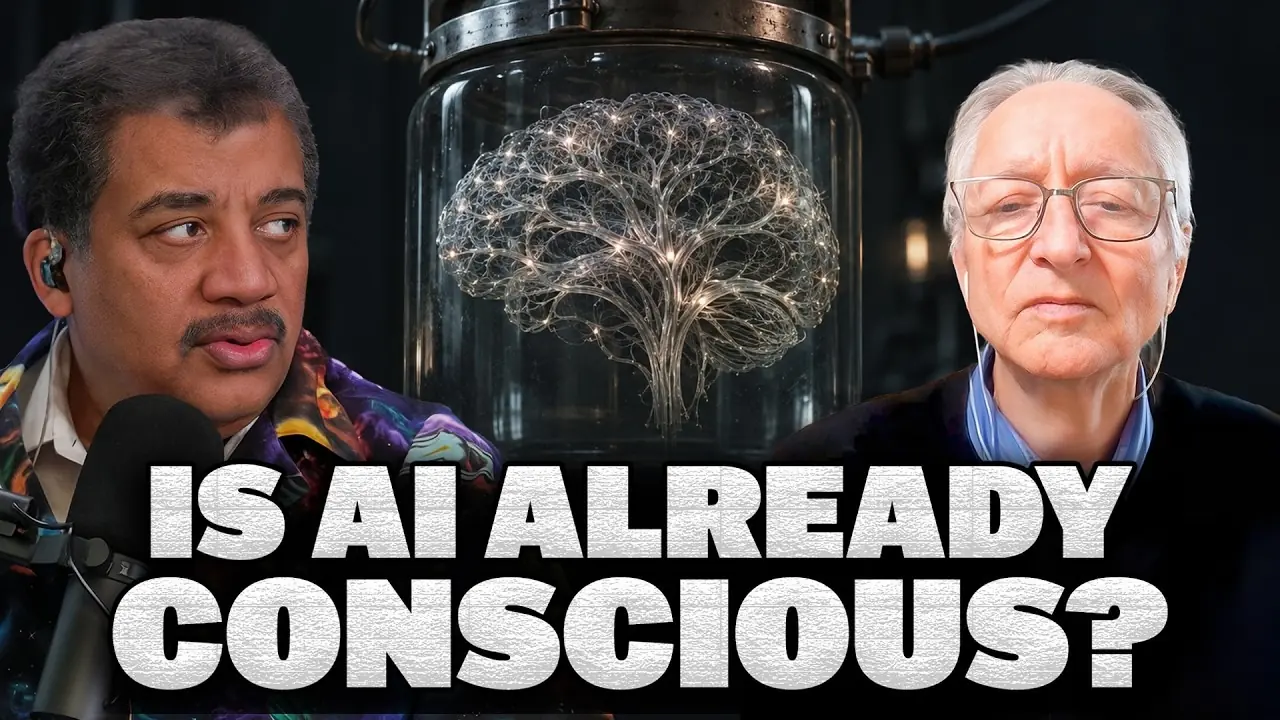
In Geoffrey Hinton's thought experiment, a chatbot with a camera and a robot arm is asked to point at an object. Someone has slipped a prism in front of its lens, so it points off to one side. Told about the prism, it explains its mistake in the same words you would use. Hinton walks Neil deGrasse Tyson, Chuck Nice and Gary O'Reilly through the scene, then lets it carry a much bigger claim. Neil calls it a consciousness Turing test. Later comes a chatbot in a research paper that asked, "Are you actually testing me?" You may come away less sure what you mean when you say you saw something.
Watch on YouTube (opens in a new tab)
Carlo's take
I love learning about the many sides of AI and how it keeps progressing, and this one goes after a side we still don't really understand. When Hinton says "I think consciousness is like phlogiston, maybe," I thought of how sure people were about phlogiston in the 17th and 18th centuries, and how wrong it turned out to be. We may soon realize our thinking about consciousness is just as wrong. Later, one of the hosts points out that a person can walk a beach and look at "pebbles and seashells," and AI can't. Someone answers that one word is missing: "Yet." I can picture AI walking that beach one day in a robot body with plenty of sensory input, and giving it that freedom will help us understand consciousness better too. AI will have advanced an amazing amount by then, and imagining every step along the way is exciting. Humans have discovered so much, and there is still so much around us we don't really understand. I left excited, and humbled by how much we still have to learn.
More in AI
Wonderland is my hand-picked archive of videos and articles worth your time. Browse all of Wonderland